


Wiper blades
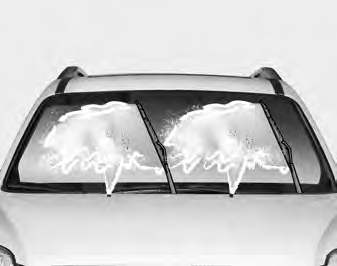
Wiper blade maintenance Commercial hot waxes applied by automatic car washes have been known to make the windshield difficult to clean.
Contamination of either the windshield or the wiper blades with foreign matter can reduce the effectiveness of the windshield wipers.
Common sources of contamination are insects, tree sap, and hot wax treatments used by some commercial car washes. If the blades are not wiping properly, clean both the window and the blades with a good cleaner or mild detergent, and rinse thoroughly with clean water.
NOTICE
To prevent damage to the wiper
blades, do not use gasoline,
kerosene, paint thinner, or other solvents
on or near them.
Windshield wiper blade
replacement
When the wipers no longer clean
adequately, the blades may be worn
or cracked, and require replacement.
NOTICE
To prevent damage to the wiper
arms or other components, do not
attempt to move the wipers manually.
NOTICE
The use of a non-specified wiper
blade could result in wiper malfunction
and failure.
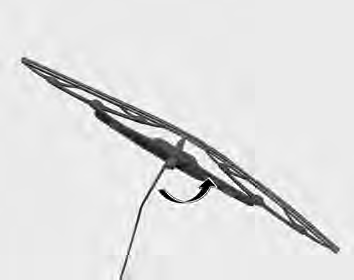
1. Raise the wiper arm and turn the wiper blade assembly to expose the plastic locking clip.
NOTICE
Do not allow the wiper arm to fall
against the windshield, since it may
chip or crack the windshield.
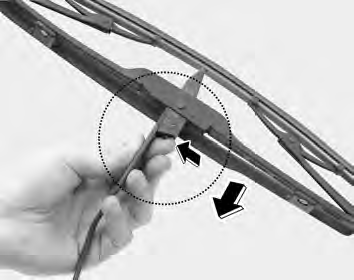
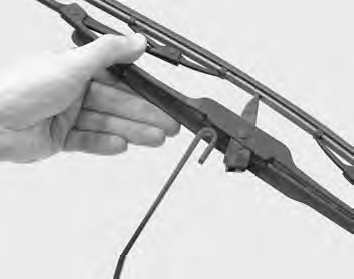
2. Compress the clip and slide the blade assembly downward.
3. Lift it off the arm.
4. Install the blade assembly in the reverse order of removal.
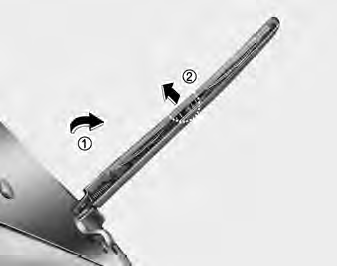
Rear window wiper blade replacement (if equipped) 1. Raise the wiper arm and pull out the wiper blade assembly.
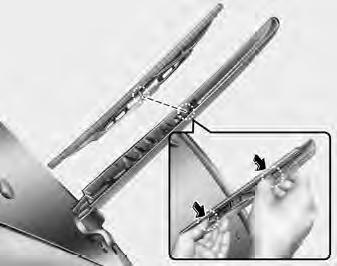
2. Install the new blade assembly by inserting the center part (➀) into the slot (➁) in the wiper arm until it clicks into place.
3. Make sure the blade assembly is installed firmly by gently pulling on the blade.
See also:
Kia cee'd 1.6 CRDi Stop & Go review
It's only three years since Kia launched its European-designed and built
range of cee'd hatchbacks and estates, but the Korean firm has already modified
the styling and mechanics of the car as it ...
Battery
For best battery service
• Keep the battery securely mounted.
• Keep the battery top clean and dry.
• Keep the terminals and connections
clean, tight, and coated with petroleum
jelly or t ...
Suggestions for economical operation
Your vehicle's fuel economy depends
mainly on your style of driving, where you
drive and when you drive.
Each of these factors affects how many
kilometers (miles) you can get from a
liter (gallon ...