


Brake/clutch fluid
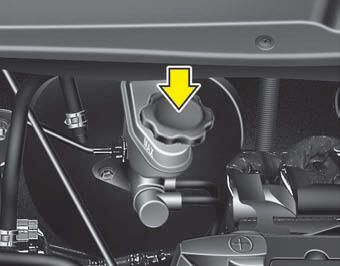
Checking the brake/clutch* fluid
level
Check the fluid level in the reservoir periodically.
The fluid level should be between MAX and MIN marks on the side of the reservoir.
Before removing the reservoir cap and adding brake/clutch* fluid, clean the area around the reservoir cap thoroughly to prevent brake/clutch* fluid contamination.
* : if equipped
If the level is low, add fluid to the MAX
level. The level will fall with accumulated
mileage. This is a normal condition associated
with the wear of the brake linings
and/or clutch disc (if equipped). If the
fluid level is excessively low, have the
brake/clutch* system checked by an
authorized KIA dealer.
Use only the specified brake/clutch* fluid.
(Refer to “Recommended lubricants and capacities� in section 8.) Never mix different types of fluid.
WARNING - Loss of
brake/clutch* fluid
In the event the brake/clutch* system
requires frequent additions of
fluid, the vehicle should be inspected
by an authorized KIA dealer.
WARNING - Brake/clutch*
fluid
When changing and adding
brake/clutch* fluid, handle it carefully.
Do not let it come in contact with your eyes. If brake/clutch* fluid should come in contact with your eyes, immediately flush them with a large quantity of fresh tap water.
Have your eyes examined by a doctor as soon as possible.
CAUTION
Do not allow brake/clutch* fluid to
contact the vehicle's body paint, as
paint damage will result.
Brake/clutch* fluid, which has been exposed to open air for an extended time should never be used as its quality cannot be guaranteed. It should be disposed of properly.
Don't put in the wrong kind of fluid.
A few drops of mineral-based oil, such as engine oil, in your brake/clutch* system can damage brake/clutch* system parts.
See also:
Key positions
Illuminated ignition switch
(if equipped)
Whenever a front door is opened, the
ignition switch will illuminate for your convenience,
provided the ignition switch is
not in the ON position. The ...
Industry-Leading Warranty
Like all Kia models, Soul is covered by a comprehensive warranty program,
which offers unprecedented consumer protection. Included in this program are a
10-year/100,000-mile limited powertrain war ...
Lubricants and fluids
Checking the washer fluid
level
The reservoir is translucent so that
you can check the level with a quick
visual inspection.
Check the fluid level in the washer
fluid reservoir and add fluid i ...